

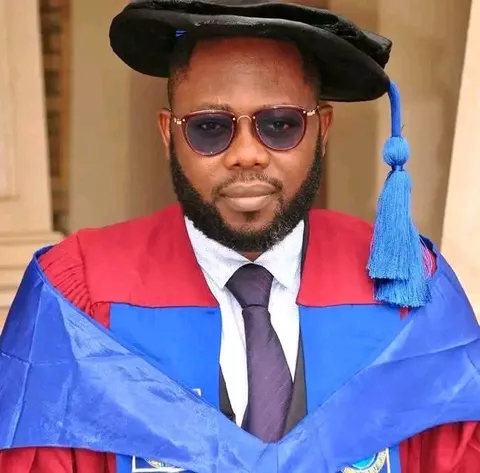
 Enugu, August 13, 2026 — It's the kind of headline that makes you stop scrolling twice. A professor of Economics at Abia State University (ABSU) said the quiet part out loud — and got suspended for it.
Professor Nnamdi Chinwendu Nwaeze of the Department of Economics, Faculty of Economics and Management Sciences at ABSU, took to Facebook amid the ongoing ASUU-ABSU strike to lay bare what he described as the shocking state of lecturer welfare at the institution.
His claims, in summary:
Most professors at ABSU earn less than ₦400,000 a month.
A commercial tricycle (keke) operator making around ₦15,000 a day could, cumulatively, out-earn a professor at the university.
ABSU lecturers are reportedly still being paid under the outdated 2009 ASUU/Federal Government salary structure, while counterparts at other universities earn between ₦1.3 million and ₦1.4 million.
Over 85% of lecturers no longer drive their own cars — a quiet but telling indicator of the financial strain.
The university allegedly owes about ₦163 million in unremitted cooperative deductions.
Rather than open a conversation about lecturer welfare, ABSU management responded swiftly. On Thursday, August 13, 2026, Deputy Registrar and Public Relations Officer Chijioke Nwogu announced Professor Nwaeze's suspension with immediate effect, describing his social media posts as "inimical to the interests of the University" and "uncomplimentary to the Visitor of the University." An investigative panel has now been set up to look into the matter.
Nwaeze's own reaction was calm and almost prophetic. He reportedly told his supporters not to sympathize with him, but to direct that sympathy toward "the paymasters" — and added that in life, someone must pay the price for the liberation of others.
Why This Story Struck a Nerve
This isn't just campus gossip — it's a mirror held up to a much bigger crisis in Nigerian public education. When a professor with decades of training, research, and teaching experience can be out-earned by informal transport workers, it raises hard questions:
What does this say about how Nigeria values higher education?
How can universities attract or retain quality academic talent under these conditions?
Is silencing lecturers who speak up about welfare a sustainable response — or does it just push frustration underground?
The timing matters too. This came right in the middle of an indefinite strike declared by ASUU-ABSU after a 14-day ultimatum over unresolved welfare demands expired. Predictably, the suspension has already drawn political reactions, with the Abia APC chapter condemning it as an act of intolerance against a lecturer speaking uncomfortable truths.
The Bigger Picture for Students and Parents
For SS2, SS3, and university-bound students following this story, it's a real-world case study in economics — supply and demand, wage stagnation, and the opportunity cost of choosing academia over other paths. It's also a reminder of why the ongoing strikes matter: they aren't abstract "adult problems," they directly affect the quality and continuity of the education students receive.
At Shadeland Tutors, we'll keep tracking how this develops — particularly the outcome of the investigative panel — because it has real implications for students in Abia State and beyond.
What do you think — was the suspension justified, or should institutions be doing more to protect lecturers who speak up about welfare? Share your thoughts in the comments.